
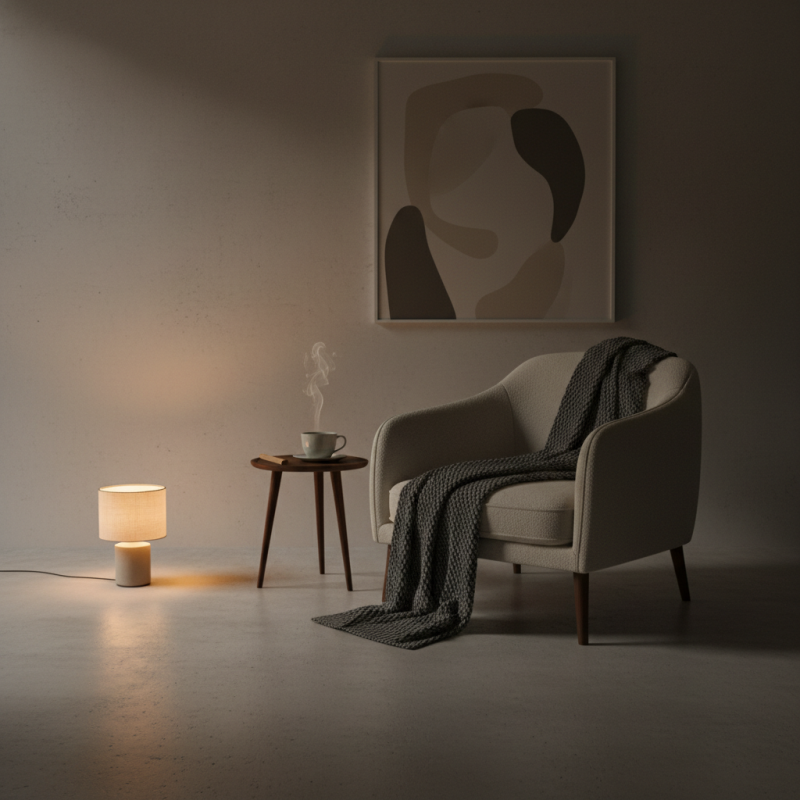
In our always-on world, the transition from a demanding day to peaceful rest often feels like a steep, slippery slope. The allure of one more email, one last scroll, or a captivating series can transform productive evenings into restless nights. This introduction sets the stage for understanding the crucial need for an intentional wind-down. We’ll explore how failing to create a distinct boundary between day and night impacts our well-being and introduce the concept of cultivating a dedicated “late-night atmosphere” as a powerful antidote. By thoughtfully incorporating elements like soothing unwind music and mindful activities, this article will guide you through crafting a personalized “perfect evening routine” that promotes deep relaxation and prepares your mind and body for restorative sleep, helping you truly unwind.
1. Setting the Scene: Visual & Sensory Foundations for Your Evening Sanctuary
Creating a tranquil late-night atmosphere begins with intentionally shaping your physical environment. This section delves into transforming your living space into a haven of calm through strategic use of light, scent, and comfort, laying the groundwork for your perfect evening routine.
1.1 The Art of Illumination: Softening Your Space
The harsh glare of overhead lights can mimic daytime, signaling alertness to your brain and actively inhibiting melatonin production, the hormone essential for sleep. To truly unwind, your lighting choices are paramount.
* Warm vs. Cool Tones: Understand the psychological impact of light temperature. Cool-toned, blue-rich light (common in fluorescent bulbs and device screens) can suppress melatonin and keep you awake. Conversely, warm-toned light, rich in reds and yellows, mimics the setting sun, signaling to your body that it’s time to wind down. Opt for bulbs with a color temperature below 2700K in your evening spaces.
* Dimmers and Lamps: Think in layers. Instead of relying on a single overhead light, strategically place table and floor lamps with soft, diffused light. Dimmers are your secret weapon, allowing you to gradually reduce light intensity as the evening progresses. This creates cozy, inviting pockets of warmth that encourage relaxation rather than stimulation.
* Avoiding Blue Light Traps: Minimizing exposure to blue light from smartphones, tablets, computers, and even some TVs is critical in the hours leading up to bedtime. Implement “screen-free” zones or times, activate night mode filters on devices, or consider blue-light blocking glasses. These small adjustments make a significant difference in preparing your eyes and brain for rest, cultivating a truly serene late-night atmosphere.
* Candlelight and Fireplaces: There’s a primal comfort in natural, flickering light. Candles (unscented or naturally scented, safety permitting) or the glow of a fireplace offer a unique, meditative quality. The gentle dance of the flame can be incredibly soothing, helping to quiet a busy mind and deepen your sense of calm.
By mastering the art of illumination, you’ve not only transformed your physical space but also sent a powerful biological signal to your body. But what about the less visible, yet equally potent, sensory triggers? How can the right aromas further deepen your journey into evening tranquility?
1.2 Aromatic Bliss: Scents for Serenity
Our sense of smell is directly linked to the limbic system, the part of the brain associated with emotion and memory. This makes aromatherapy a powerful, often overlooked, tool for crafting a truly serene late-night atmosphere.
* Essential Oils for Relaxation: Certain essential oils are renowned for their calming properties.
* Lavender: Perhaps the most famous, it’s known for reducing anxiety and improving sleep quality.
* Chamomile: Gentle and soothing, often found in bedtime teas, it also works wonders diffused.
* Sandalwood: Earthy and grounding, promoting mental clarity and peacefulness.
* Cedarwood: Its warm, woody scent is known for its sedative effects and ability to ease tension.
* Bergamot: A citrus scent with surprising calming properties, often used to alleviate stress.
* Diffusers vs. Sprays: Essential oil diffusers disperse fine mists of oil into the air, creating a consistent, subtle fragrance throughout your space. Look for ultrasonic diffusers for a flameless, water-based solution. Room sprays, made with natural essential oils, offer a quick burst of scent to freshen linen, pillows, or the air before you settle in. Choose what best fits your preference and safety considerations.
* Scented Candles (Safety First): While scented candles can contribute to a cozy late-night atmosphere, prioritize safety. Opt for candles made from natural waxes like soy, beeswax, or coconut wax, which burn cleaner than paraffin. Choose subtle, soothing scents that align with your relaxation goals, and *never* leave a burning candle unattended.
* Natural Aromas: Beyond oils and candles, incorporate natural aromas. Small sachets filled with dried lavender or chamomile can be tucked under pillows. A bowl of natural potpourri with dried orange peels, cinnamon sticks, and cloves can offer a gentle, comforting scent. Even fresh, non-allergenic flowers in your evening sanctuary can uplift your mood without being overpowering.
With the air around you imbued with calming scents, your sensory journey toward relaxation is well underway. But there’s one more physical comfort that can profoundly affect your ability to unwind and fully embrace your perfect evening routine – the power of touch.
1.3 Tactile Comfort: Embracing Softness and Warmth
The textures you surround yourself with play a significant role in fostering a sense of security, warmth, and ease. This tactile dimension is crucial for a truly comforting late-night atmosphere.
* Luxurious Throws and Pillows: Invest in throws made from soft, inviting materials like cashmere, chenille, fleece, or faux fur. Drape them over your favorite armchair or sofa, ready to cocoon you in warmth. Similarly, plump, comfortable pillows (whether decorative or for support) can enhance the feeling of coziness, inviting you to sink deeper into relaxation. The sensation of softness against your skin signals safety and comfort, helping your nervous system settle.
* Comfortable Loungewear: The simple act of changing out of your “day clothes” into dedicated evening attire can be a powerful psychological trigger. Slip into soft pajamas, a comfortable robe, or loose loungewear. This physical transition marks the end of your productive day and the beginning of your personal time, shedding the mental baggage along with your work clothes. It’s an intentional step towards unwinding and preparing for rest.
* Decluttering for Calm: A cluttered physical space often translates to a cluttered mental space. Before settling in for the evening, take a few minutes to tidy up your immediate environment. Put away stray items, clear surfaces, and organize what’s visible. A visually tidy space reduces mental distractions and fosters a sense of order and peace, making it easier for your mind to let go and simply unwind.
By consciously curating your visual, aromatic, and tactile environment, you’ve laid a robust foundation for your evening sanctuary. But what about the sounds that fill this space? How can auditory alchemy transform your ability to relax and drift into the deep rest your mind and body crave?
2. Auditory Alchemy: Curating Unwind Music and Sounds for Deep Relaxation
Sound is a powerful, often underestimated, tool in crafting the perfect late-night atmosphere. This section explores how specific auditory elements can profoundly influence your ability to relax and drift off to sleep, becoming an integral part of your perfect evening routine.
2.1 The Science of Sound: How Music Affects Your Brain
Our brains are incredibly receptive to auditory input, and specific sounds can directly influence our brainwave states, guiding us from alertness to deep relaxation.
* Alpha and Theta Waves: When you’re awake and alert, your brain primarily produces beta waves. As you begin to relax and your mind becomes calm, alpha waves emerge, often associated with states of meditation and flow. Deeper relaxation, bordering on the sleep state, brings theta waves. Certain types of unwind music are designed to encourage the production of these alpha and theta waves, gently guiding your brain into a more peaceful state.
* Beats Per Minute (BPM) for Calm: The tempo of music directly correlates with your heart rate and brain activity. Fast, upbeat music can elevate your heart rate and stimulate your mind. Conversely, music with a slower tempo, typically between 60-80 BPM, can synchronize with a resting heart rate and promote relaxation. Look for music in this range to create a truly calming late-night atmosphere.
* Neuro-acoustics: This field explores how specific frequencies and binaural beats (two slightly different frequency tones played in each ear) can influence brainwave activity. While complex, the takeaway is that carefully constructed auditory experiences can literally help ‘tune’ your brain to a more relaxed frequency, making it easier to unwind and transition from a busy day.
Understanding the science behind sound empowers you to make informed choices for your evening wind-down. But how do you translate this knowledge into a practical, personalized playlist of unwind music?
2.2 Crafting Your Ultimate Unwind Music Playlist
Building a go-to playlist of unwind music is a deeply personal endeavor, yet there are common elements that prove universally effective in facilitating a peaceful late-night atmosphere.
* Genre Exploration:
* Ambient Music: Characterized by its atmospheric, unobtrusive nature, designed to evoke a sense of space and tranquility rather than demanding attention.
* Classical Music: Particularly slower movements from composers like Chopin, Debussy, and Satie, which can have a profoundly calming effect.
* Lo-fi Hip Hop: Often featuring gentle beats, mellow melodies, and a slightly muted quality, perfect for background relaxation without overstimulation.
* Gentle Jazz: Smooth, instrumental jazz can provide a sophisticated yet soothing backdrop.
* Instrumental Folk/Acoustic: Soft guitar, piano, or string arrangements can be incredibly grounding.
* New Age/Meditation Music: Specifically designed with relaxation in mind, often incorporating natural sounds and gentle harmonies.
* Avoiding Lyrical Distractions: While you might love certain songs, lyrics—even in relaxing genres—can engage your cognitive processes, prompting you to analyze meaning or sing along. For optimal late-night relaxation, instrumental music often reigns supreme, allowing your mind to drift without interruption, making it easier to truly unwind.
* Personalizing Your Sonic Journey: What one person finds relaxing, another might find distracting. Experiment with different genres and artists to discover what resonates most with you. Build a playlist that feels intuitively calming and helps you effortlessly shift into your perfect evening routine. Consider different playlists for different moods – something to de-stress after a tough day, and something else for a gentle, reflective evening.
* Music Streaming Services: Platforms like Spotify, Apple Music, and YouTube are rich with curated relaxation playlists. Search for terms like “sleep music,” “ambient study,” “meditation music,” or “chill instrumental” to discover pre-made options or find inspiration for your own. Many offer “focus” or “sleep” modes that filter out more stimulating content.
While carefully curated music is a powerful tool, sometimes the most profound calm comes from sounds that aren’t music at all. What non-musical auditory elements can further enhance your journey into deep relaxation?
2.3 Beyond Music: Embracing Ambient Sounds
Sometimes, the absence of structure is precisely what the mind needs to quiet itself. Ambient sounds offer a different kind of auditory experience, one that can be profoundly effective in crafting a peaceful late-night atmosphere and guiding you towards your perfect evening routine.
* Nature Sounds: Our brains are wired to find comfort in the rhythms of the natural world. The gentle patter of rain, the rhythmic ebb and flow of ocean waves, the subtle rustle of leaves in a forest ambiance, or the mesmerizing crackle of a fire can mask jarring household noises and create a deeply soothing backdrop. These sounds often evoke a sense of peace and security, helping to lower stress hormones and promote relaxation.
* White and Pink Noise:
* White Noise: Contains all audible frequencies distributed equally, often described as a steady “shh” sound. It’s excellent for blocking out sudden, distracting noises (like street traffic or neighbors) by creating a consistent sound mask.
* Pink Noise: Similar to white noise but with lower frequencies emphasized, making it sound “deeper” or “softer” – often compared to the sound of steady rain or wind. Research suggests pink noise may be particularly effective at improving sleep quality by promoting more stable slow-wave sleep.
* Guided Meditations & Sleep Stories: For those whose minds struggle to quiet down, guided audio can be a godsend.
* Guided Meditations: These lead you through mindfulness exercises, helping you focus on your breath, sensations, or visualizations, thereby gently steering your thoughts away from the day’s stresses.
* Sleep Stories: Narrated tales, often designed to be calming and slightly monotonous, that engage your imagination just enough to distract your busy mind without stimulating it, helping you drift off. Many apps like Calm and Headspace specialize in these.
By integrating these auditory elements, you’re not just filling the silence; you’re creating a soundscape that actively encourages your brain to slow down, release tension, and prepare for restorative sleep. But beyond simply listening, what intentional activities can you engage in to further process your day and fully embrace your perfect evening routine?
3. Mindful Movements & Moments: Engaging Activities for Your Perfect Evening Routine
Beyond sensory input, the activities you choose as part of your late-night atmosphere play a crucial role in shifting your mindset from busy to tranquil. This section focuses on gentle, intentional practices that help you process the day and prepare your mind and body for restorative rest.
3.1 The Power of the Printed Page: Reading for Relaxation
In an age dominated by screens, reconnecting with the tactile pleasure of a physical book can be a profoundly calming and effective way to unwind.
* Choosing the Right Books: The goal here is relaxation, not stimulation. Opt for engaging fiction, beautiful poetry, or light, uplifting non-fiction. Avoid thrillers, suspense novels, or heavy non-fiction that requires intense critical thinking or might stir up anxieties about work or the world. Let your imagination wander gently, without demanding intense intellectual effort. This helps create a truly peaceful late-night atmosphere.
* E-readers vs. Physical Books: While convenient, e-readers can emit blue light, which, as we discussed, can interfere with melatonin production. If you use an e-reader, ensure it has a warm-light setting or a blue-light filter, and avoid back-lit screens where possible. Physical books, however, offer a truly screen-free experience, complete with the satisfying rustle of pages and the comforting scent of paper.
* Creating a Reading Nook: Enhance your reading experience by designating a cozy spot. This might be an armchair with a soft throw, under a warm-toned lamp, or nestled in bed with supportive pillows. Having a dedicated space signals to your brain that it’s time to slow down and immerse yourself in a story, making it an integral part of your perfect evening routine.
After absorbing stories from others, sometimes the most profound way to unwind is to explore your own inner narrative. What happens when you put pen to paper?
3.2 Journaling Your Thoughts: Releasing the Day
Journaling is a powerful practice for mental decluttering, allowing you to process the day’s events, release stress, and gain clarity without judgment. It’s an invaluable component of a mindful late-night atmosphere.
* Gratitude Journaling: Before bed, shift your focus to the positive. List 3-5 things you’re grateful for, no matter how small. This practice can rewire your brain to seek out the good, reducing negative ruminations and fostering a sense of peace and contentment.
* Brain Dump for Stress Release: If your mind is racing with worries, to-dos, or unresolved thoughts, conduct a “brain dump.” Write down everything that comes to mind, without censoring or organizing. Getting these thoughts out of your head and onto paper can significantly reduce mental clutter and help you truly unwind. You can deal with them tomorrow; tonight, you release them.
* Reflective Prompts for Self-Awareness: Use guided questions to explore your day and emotions. Prompts like “What challenged me today and what did I learn?” or “What brought me joy today?” can help you process experiences, gain self-awareness, and let go of lingering feelings before sleep.
* Mindful Doodling or Sketching: For those who prefer a non-verbal outlet, simple doodling or sketching can be incredibly meditative. It engages a different part of your brain, allowing for creative expression and stress reduction without the pressure of words. Focus on the movement of your hand and the lines you create, letting your thoughts gently recede.
Having engaged your mind through reading and journaling, the final step in crafting your perfect evening routine involves reconnecting with your body through gentle movement and breath.
3.3 Gentle Body & Breath: Stretching and Mindfulness
Before slipping into sleep, a few minutes of gentle physical activity and focused breathing can help release any lingering physical tension and calm your nervous system, completing your transformation into a serene late-night atmosphere.
* Simple Evening Yoga Poses: These are not about breaking a sweat but about gentle release and flexibility.
* Cat-Cow: Mobilizes the spine and coordinates movement with breath, releasing tension in the back.
* Child’s Pose: A deeply restorative pose that calms the brain and helps relieve stress and fatigue.
* Legs-Up-the-Wall: A fantastic pose for reducing swelling in the legs, calming the nervous system, and gently stretching the hamstrings.
* Supine Spinal Twist: Gently stretches the spine and releases tension in the lower back and hips.
* Deep Breathing Exercises: Consciously regulating your breath sends a direct signal to your nervous system to calm down.
* Box Breathing (4-4-4-4): Inhale for 4 counts, hold for 4, exhale for 4, hold for 4. Repeat several times to reset your breath.
* 4-7-8 Method: Inhale through the nose for 4 counts, hold your breath for 7 counts, exhale completely through the mouth (making a whoosh sound) for 8 counts. Repeat 3-4 times. This method is often touted as a natural tranquilizer for the nervous system.
* Diaphragmatic Breathing: Focus on breathing into your belly, not just your chest. This deep breathing encourages full oxygen exchange and slows the heart rate.
* Progressive Muscle Relaxation (PMR): Systematically tense and then relax different muscle groups throughout your body. Start with your toes, tense for 5 seconds, then completely relax. Move up through your body (calves, thighs, glutes, abdomen, arms, shoulders, face). This practice heightens your awareness of tension and helps you consciously release it, allowing your body to completely unwind.
* Mindful Body Scan: Lie down comfortably and bring your attention to each part of your body, one by one. Notice any sensations without judgment – warmth, coolness, tingling, tension, or relaxation. This practice brings you into the present moment, anchoring your awareness in your physical self and detaching from racing thoughts.
The Long-Term Benefits of a Consistent Wind-Down Routine for Mental Well-being and Sleep
Crafting the perfect late-night atmosphere is more than just a fleeting indulgence; it’s a vital investment in your overall health and happiness. By embracing a holistic approach to your evening ritual, incorporating intentional lighting, soothing unwind music, and mindful activities, you cultivate a powerful sanctuary that signals to your mind and body that the day is done, and rest is coming.
We’ve explored how a carefully chosen warm light palette can boost melatonin, how aromatic essential oils can calm the nervous system, and how luxurious textures provide tangible comfort. We’ve delved into the science of sound, guiding you to curate unwind music and ambient soundscapes that gently shift your brain into a state of deep relaxation. And finally, we’ve empowered you with mindful activities – from the quiet escape of reading and the catharsis of journaling to the physical release of gentle stretches and breathwork – all designed to help you process your day and fully embrace your perfect evening routine.
The profound, long-term benefits of this consistent practice are undeniable: improved sleep quality, leading to greater energy and focus the next day; reduced stress and anxiety, as you intentionally create a boundary between work and rest; enhanced mental clarity, as your mind has dedicated time to process and release; and a deeper sense of self-care and well-being, affirming your commitment to your own peace. This intentional late-night atmosphere is not just about unwinding at night; it’s about recharging for a more vibrant, balanced, and fulfilling life. Make this routine your non-negotiable ritual, and watch as your evenings transform into a wellspring of calm and restoration.